Value & Impact · Dermatology
Every Lesion and Biopsy, Signed Same Day
A two-page overview for dermatology practices: where most documentation tools fall short in a high-volume clinic, and what it looks like when every lesion and biopsy is documented and signed the same day.
Notes Pile Up Faster Than Providers Can Finish Them
Dermatology moves fast: short, high-frequency visits, precise lesion documentation, biopsy tracking that cannot slip, and pathology follow-ups that have to close.
At that pace, notes pile up faster than any provider can finish them between patients, and the backlog waits at the end of every clinic day.
Where Most Tools Fall Short
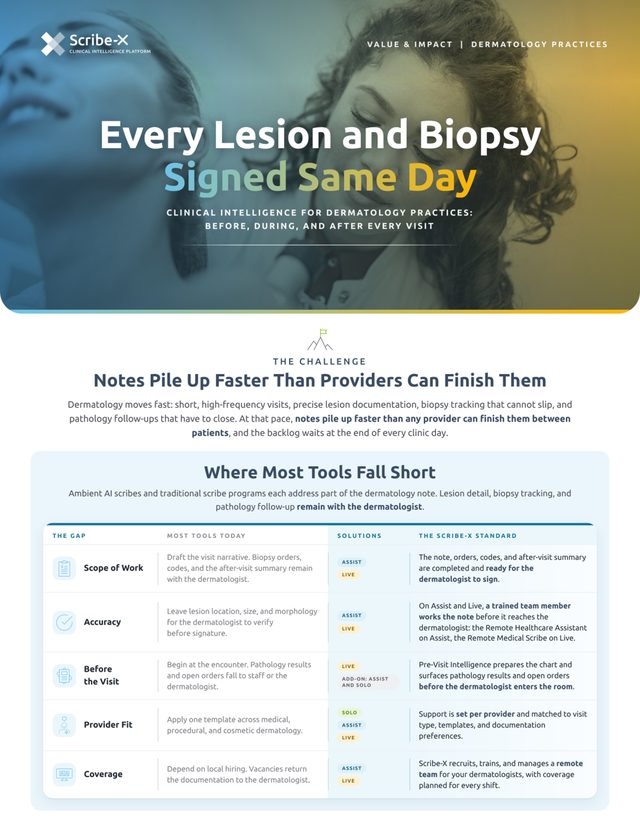
Ambient AI scribes and traditional scribe programs each address part of the dermatology note. Lesion detail, biopsy tracking, and pathology follow-up remain with the dermatologist. The two-pager puts five gaps side by side.
The gapMost tools todayThe Scribe-X standard
Scope of WorkDraft the visit narrative. Biopsy orders, codes, and the after-visit summary remain with the dermatologist.
AccuracyLeave lesion location, size, and morphology for the dermatologist to verify before signature.
Before the VisitBegin at the encounter. Pathology results and open orders fall to staff or the dermatologist.
Provider FitApply one template across medical, procedural, and cosmetic dermatology.
CoverageDepend on local hiring. Vacancies return the documentation to the dermatologist.
What's Inside the Two-Pager
- The full gap table: what most tools leave with the dermatologist, and the standard Scribe-X holds on each of the five gaps.
- Solo, Assist, and Live mapped to a dermatology clinic, and why most dermatologists choose Live.
- Before, during, and after the visit: what is ready before the dermatologist walks in, and what arrives ready to sign.
- Four outcome numbers from Scribe-X programs: same-day notes, shift coverage, patients per provider per day, and documentation time saved.