
The work is done before the patient leaves.
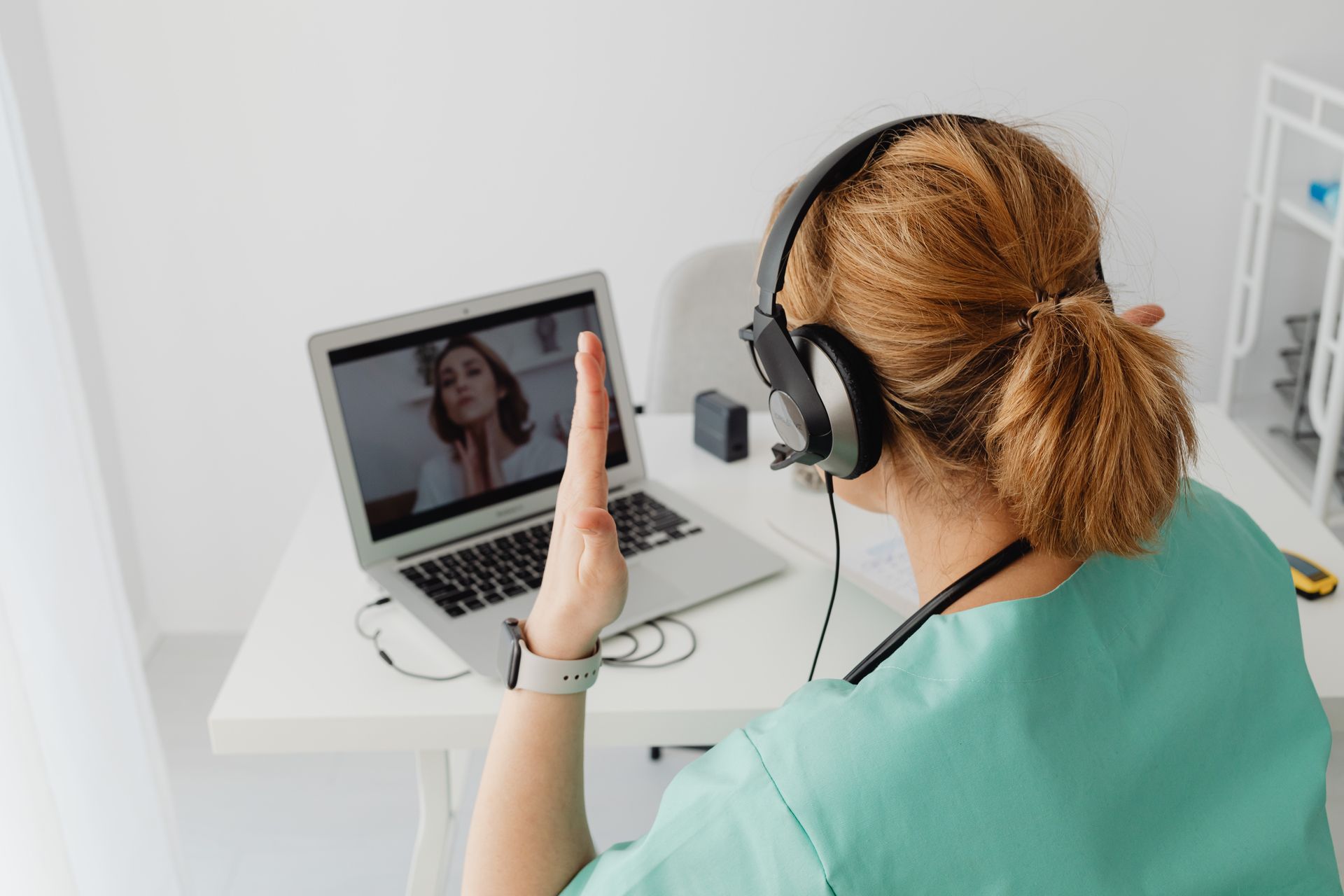
A trained Remote Medical Scribe documents the encounter in real time, shaped to how each provider works. High-touch coverage for the visits where documentation can't wait.
What your organization gets
The chart closes at the visit, so documentation never becomes tomorrow's backlog.
Orders, referrals, and follow-ups get staged in the moment instead of dropping.
Coverage that holds when somebody calls in sick, with cross-trained backup in the schedule.
What improves before, during, and after
One engagement, the whole visit. Everything below is part of Live coverage from day one.
Four things a trained scribe changes about the clinical day, in the order a provider feels them.
- Step 01
Nobody preps their own chart at night
The chart is summarized before each visit, so the appointment doesn't open with catching up and the pre-charting comes off the evening.
- History, problem list, medications, open orders and labs summarized before each visit
- Pre-charting time lifted; providers walk in with the chart already prepped
- Built into Live coverage, with nothing to scope as an add-on
- Step 02
The provider is present for the whole visit
Providers spend the visit with the patient instead of the keyboard, while a trained Remote Medical Scribe documents the encounter in real time.
- A structured SOAP note plus a plain-language after-visit summary at encounter close
- Encounters in the patient's language, documented accurately with translated summaries
- A trained scribe can ask for clarification in the moment and get the note right the first time
A trained scribe brings clinical intelligence to the encounter that a recording can't.
- Step 03
The loops close before they can drop
A lab with no callback and a referral that never went out are the ones that come back as a repeat visit. Follow-through is carried as part of coverage.
- Orders, referrals, and provider instructions staged as part of live coverage
- Verbal orders pended for provider review, including medications, right in the EHR
- Revenue and quality items captured in the flow of care
- Step 04
Nothing carries into the evening
The work is done before the patient leaves, and every note is ready to sign the same day.
- The chart closes complete and specific at the visit
- Every note is ready to sign the same day
- Clinical decisions, the medical record, and the signature remain the provider's
What Live coverage gives you
One engagement, the whole journey. Providers get the full stack from day one.
Time comes back
4 includedDocumentation stops competing with patients for the provider's day.
Live encounter coverage
Documentation time returned inside the visit itself, and freed time becomes capacity.
A trained Remote Medical Scribe documents the encounter in real time, in-office and telehealth.
Pre-visit chart preparation
Providers walk in ready, and pre-charting comes off the evening.
Chart summarized before each visit: history, problem list, medications, open orders and labs.
SOAP note and after-visit summary
Charts close at the visit and instructions land clearly.
Structured note plus plain-language patient summary at encounter close; multi-language capable.
Provider style and specialty customization
Less editing per note, and output providers trust enough to sign.
Documentation shaped to each provider's structure, terminology, and specialty templates.
Follow-through that doesn't drop
1 includedOrders and referrals leave the visit already staged.
Order staging and dictation capture
Fewer dropped orders, because the follow-through is carried into the EHR.
Orders, referrals, and provider instructions staged as part of live coverage.
The value you create gets captured
2 includedRevenue and quality, recorded in the flow of care.
Revenue capture in the encounter
Appropriate levels of service and accurate risk capture, which is cash in a fee-for-service group.
Completeness and specificity, HCC opportunity visibility, E&M support, charge capture.
Quality capture in the encounter
Measures captured in the flow of care, and a record that holds up.
Care gap and measure visibility, preventive reminders, problem list and med accuracy.
Patients leave with clear next steps
1 includedInstructions in plain language, in the patient's language.
Multilingual encounter support
Language-diverse populations served without a parallel workflow.
Encounters in the patient's language, documented accurately with translated summaries.
Leadership sees it working
1 includedAdoption, turnaround, and outcomes in one view.
Account dashboard and reporting
One leadership view of coverage, turnaround, and outcomes across sites.
Visibility dashboard and regular reporting cadence for every organization.
On the development roadmap
What's still ahead for Live. Roadmap items are never current-state commitments.
Coding suggestions (ICD-10 / CPT)
Coding accuracy uplift and cleaner claims.
Suggested codes with documentation-gap highlighting for higher specificity.
Charge validation and documentation scoring
Denial prevention at the source.
Missed-charge detection before sign-off; notes scored against specialty requirements.
Revenue-at-risk and denial prevention
Faster, steadier revenue cycle visibility.
Dashboards of pending charges and denial risk with proactive alerts.
Quality gap and HCC prep suggestions
Gaps addressed in the visit, where they close fastest.
Pre-visit surfacing of quality gaps and HCC opportunities, including outside records.
Support is set per provider
Every provider is set to the level of support that fits them, inside one account with one vendor. Live is the high-touch, specialty end of that, and it runs alongside Assist and Solo in the same organization.


Put a trained scribe on the visits that need one.
A 30-minute conversation, no commitment. We'll scope which providers need Live coverage and which are better served by Assist or Solo.
Or have us reach out
Leave your details and we'll come back to you with a straight answer.
Live questions, answered
What clinical and IT leaders ask about the high-touch solution on the platform.
Implementation depends on the size of the program. Most practices are live within a few weeks of contract signing, with recruiting, training, and onboarding handled by Scribe-X.
Yes. Every Scribe-X scribe is based in the United States and trained in HIPAA compliance and clinical documentation standards. We don't outsource to overseas teams.
Every scribe completes a rigorous onboarding program: live training, EHR practice, specialty-specific modules, and direct coaching. Training is then customized to each clinic's documentation preferences, workflows, and note styles before the first shift.
Backup plans are built into your schedule. Cross-trained scribes step in to maintain coverage and continuity, so providers keep their support.
Yes. Scribes pend verbal orders for provider review, including medications, referrals, and patient instructions, right in the EHR, and visit notes are complete before the patient leaves.
A trained scribe thinks clinically, asks for clarification in the moment, and gets the note right the first time. Dictation and ambient capture both hand you a draft and stop there.
Yes. Scribes support quality data capture, screening documentation, and care gap closure initiatives as part of everyday coverage.
Still have questions? Book a Meeting →