High-Volume Eye Clinics, Every Exam Documented
A two-page overview for ophthalmologists: where most documentation tools fall short in a high-volume eye clinic, and what it looks like when every exam is documented before the patient leaves.
The Highest Producers Need the Best Support
Ophthalmology runs some of the highest visit volumes in outpatient medicine: exam-heavy encounters measured in minutes, structured findings for every eye, and a schedule that never slows down.
The highest-producing ophthalmologists need the strongest documentation support: a trained scribe who is always in the seat, or AI documentation that keeps pace with their volume and templates. When that support slips, the documentation lands back on the provider the same day.
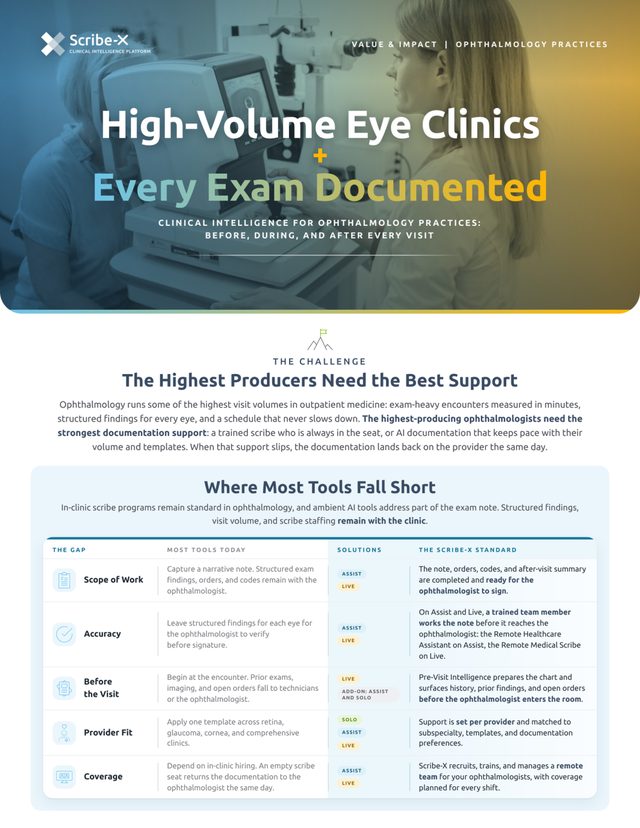
Where Most Tools Fall Short
In-clinic scribe programs remain standard in ophthalmology, and ambient AI tools address part of the exam note. Structured findings, visit volume, and scribe staffing remain with the clinic. The two-pager puts five gaps side by side.
What's Inside the Two-Pager
- The full gap table: what most tools leave with the clinic, and the standard Scribe-X holds on each of the five gaps.
- Solo, Assist, and Live mapped to an eye clinic, and why most high-volume ophthalmologists choose Live.
- Before, during, and after the visit: what is ready before you enter the room, and what arrives ready to sign.
- Four outcome numbers from Scribe-X programs: same-day notes, shift coverage, patients per provider per day, and documentation time saved.